


3AM Technologies Brings Affordable Medication Dispensing to Critical Access Hospitals
If you work in IT at a Critical Access Hospital (CAH), you already know the math doesn't work the same way it does at a 300-bed regional medical center. Your budget is smaller. Your staff is thinner. And when a vendor tells you that their medication dispensing solution will run you six figures just to get started, you're not surprised - you're just reminded that the product wasn't built for you.
That's the gap 3AM Technologies has been working to fill with its ServeRx Medication Management System. Based in Joelton, Tennessee, 3AM Technologies has been building and supporting medication dispensing solutions specifically for the healthcare facilities that the major vendors have historically underserved: Critical Access Hospitals, small rural facilities, and correctional health care environments. The company was founded in 2010 and acquired the ServeRx platform from MDG Medical in January 2012, and they have been developing and expanding the product line since.
This is not a launch story. ServeRx has been in the field for years. What makes it worth covering now is the way the product's design philosophy aligns with the operational and budgetary realities that CAH IT teams deal with every day - and the fact that those realities are only getting more challenging.
The Problem ServeRx Is Solving
There are roughly 1,380 Critical Access Hospitals operating across 45 states in the United States today, each limited by federal designation to 25 beds or fewer. These facilities are often the only source of emergency and inpatient care for communities that may be 35 miles or more from the next nearest hospital. They operate on thin margins, often with cost-based Medicare reimbursement at 101% of allowable costs, and their IT budgets reflect that reality.
Automated medication dispensing cabinets (ADCs) have been a standard of care in larger hospitals for decades. BD Pyxis (now owned by Becton Dickinson) and Omnicell dominate the market, and their products are well-established in mid-size and large hospital environments. Both vendors offer capable systems with deep EHR integrations, controlled substance management, and robust reporting.
But those systems were designed for organizations with larger pharmacy operations, bigger IT teams, and substantially bigger budgets. For a 25-bed CAH with a part-time pharmacist and an IT team that might be one or two people, the cost of entry for a Pyxis or Omnicell deployment - hardware, software licensing, integration, and ongoing support - can be prohibitive. And the cost of ownership over time is where it really gets difficult, for reasons we will get into shortly.
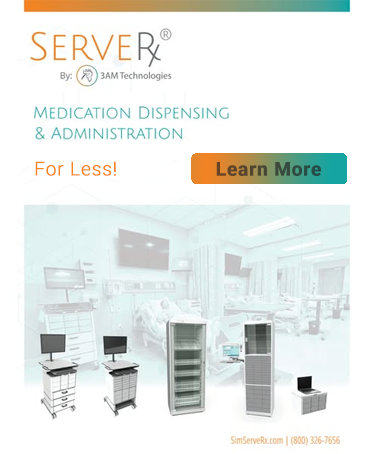
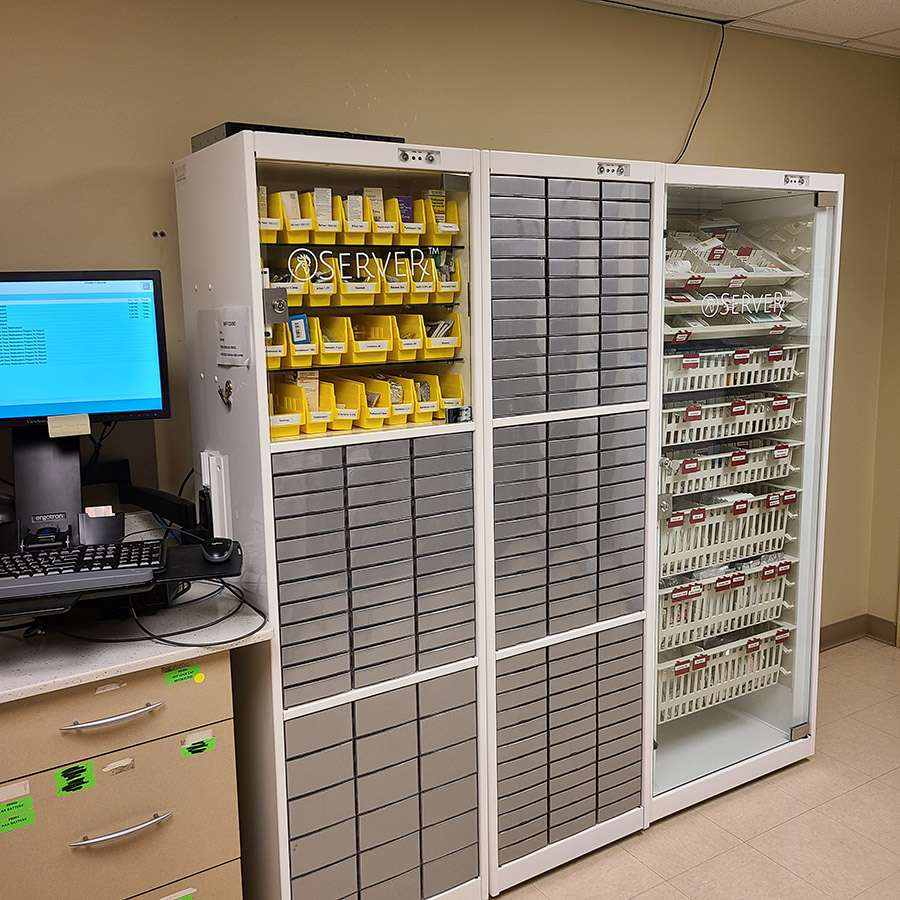
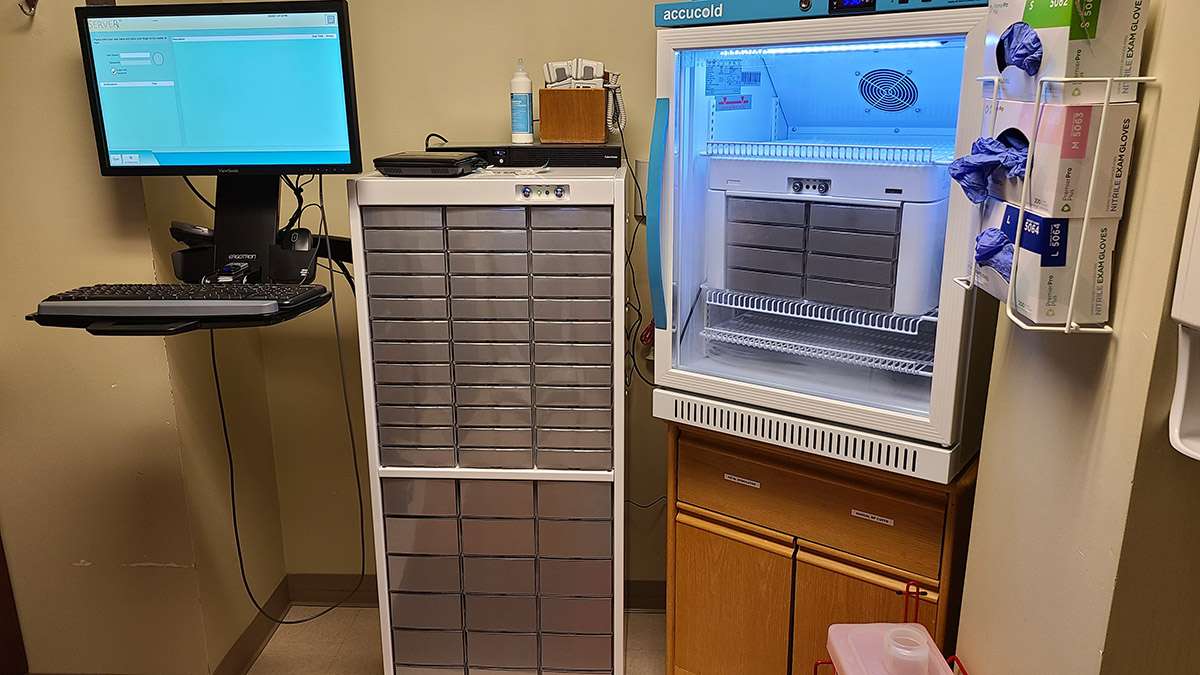
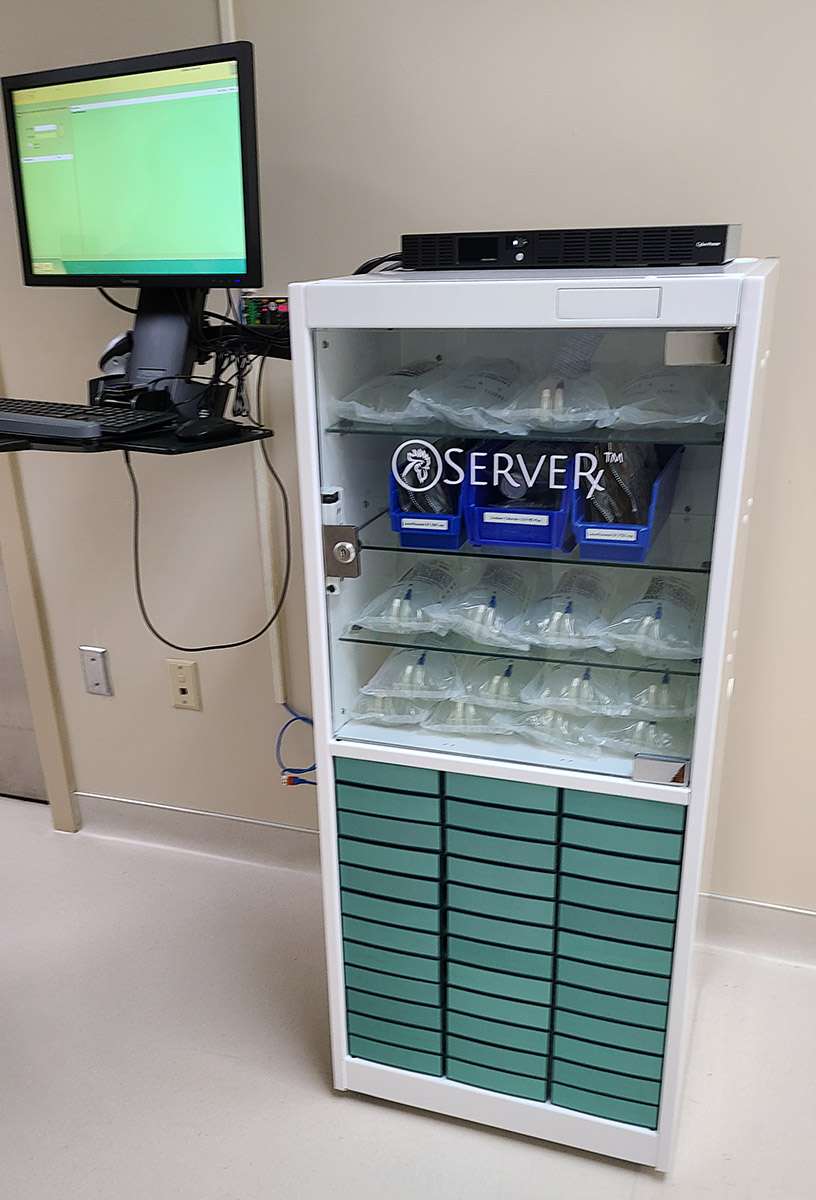
3AM Technologies built ServeRx to serve this segment directly. The system provides a closed-loop medication management workflow from order entry through medication administration, including dispensing cabinets, supply cabinets, mobile SmartCart bedside solutions, barcode patient identification, biometric fingerprint authentication, eMAR (electronic Medication Administration Record), and compliance reporting. It interfaces with EHR and HIS systems via an integration engine. On paper, it covers the same core functional territory as the larger vendors' offerings. The difference is in how it's built, how it's priced, and how it's supported.
Where ServeRx Stands Out for Health Care IT
From an IT management perspective, there are a few things about the ServeRx platform that are genuinely uncommon in this product category and worth calling out.
It runs in a properly secured environment. This sounds like it should be a baseline expectation, but anyone who has deployed clinical software in a healthcare environment knows better. It is disturbingly common for medication dispensing systems - and clinical applications in general - to require disabled User Account Control (UAC), disabled Windows Firewall, antivirus exclusions that effectively gut endpoint protection, or local administrator rights for end users just to function. Every one of those concessions is a security risk, and every one of them makes compliance harder.
How common? Publicly available domain support documentation from at least one major medication dispensing vendor requires facilities to place their systems in a dedicated Active Directory OU with Group Policy inheritance blocked, run a vendor-provided utility that disables domain policies via registry modifications, use local accounts with administrative privileges for auto-logon on both servers and cabinets, configure antivirus exclusions for vendor-specified files, and explicitly states that domain security policies cannot be enforced and Microsoft patches cannot be automatically pushed to the vendor's systems. That is not an outlier scenario. IT teams supporting medication dispensing systems from major vendors regularly encounter requirements like these, and each one represents a gap in the facility's security posture that has to be documented, justified, and managed.
ServeRx has been reported by technicians and systems administrators at and serving rural hospitals to run with UAC enabled, Windows Firewall active, and antivirus software running on both the server and workstations - without requiring end users to have administrator rights. No dedicated OUs with blocked inheritance. No vendor scripts disabling Group Policy. No local admin auto-logon. For IT teams trying to maintain a defensible security posture while meeting HIPAA Security Rule requirements, this matters. In a healthcare environment where every security concession creates risk, a system that works within standard controls rather than around them is a meaningful differentiator.
The HIPAA Security Rule requires covered entities to implement access controls for electronic information systems that maintain electronic protected health information (ePHI), including unique user identification (45 CFR 164.312(a)(2)(i)), which is a Required implementation specification. Audit controls (45 CFR 164.312(b)) are also Required. A system that forces you to disable UAC or grant users admin rights to function is actively working against your ability to meet these requirements. ServeRx's biometric fingerprint authentication and unique user logins support these requirements by design, not by workaround.
The cabinet computers are replaceable, not built-in. This is a design decision that has enormous implications for total cost of ownership. With most major medication dispensing cabinet vendors, the computer hardware is integrated directly into the cabinet. When the operating system running on that computer reaches end of life - as Windows 10 did in October 2025 - the embedded hardware often cannot run the replacement OS. In many cases, the vendor's response is that you need to purchase an entirely new cabinet.
For facilities running the larger vendors' systems, that forced hardware refresh can mean $20,000 to $40,000 per cabinet. For a CAH with three or four cabinets, that is a $60,000 to $160,000 expenditure driven not by the cabinets wearing out mechanically, but by the computers inside them becoming unsupportable. Many CAHs end up facing $50,000 to $80,000 or more in total hardware replacement costs when an OS lifecycle transition hits.
3AM Technologies designed ServeRx cabinets with replaceable, external-mount computer hardware - a design decision consistently reported by technicians and administrators at facilities running the system. When it is time to move to a new operating system, the computer can be swapped out without replacing the cabinet itself. The cabinet body, drawers, locks, and mechanical components continue to serve. This is a fundamentally different approach to hardware lifecycle management, and for budget-constrained facilities, it can be the difference between staying current and falling behind. Prospective buyers should confirm current hardware upgrade procedures directly with 3AM, as design details may evolve across cabinet models.
3AM has maintained backward hardware compatibility. The company has continued to support all of their cabinet models with new software and OS versions, including Windows 11 support. They have not orphaned older hardware to drive new cabinet sales. For a CAH that bought ServeRx cabinets five or eight years ago, that means the investment is still current and supported. This is a vendor posture that builds trust, and it is not universal in this market.
The Software Side
ServeRx's Foundation Software Suite provides the core medication management functionality. The modular design lets facilities choose the components they need. Key software modules include an interface engine for EHR/HIS integration (supporting ADT, billing, and order interfaces), compliance reporting for controlled substance tracking and expiration management, workflow and scheduling tools for nursing and pharmacy staff, catalog management, inventory management with automated low-stock alerts, and computerized physician order entry (CPOE).
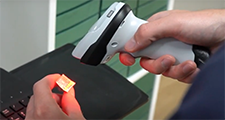
The system supports barcode scanning for medication verification at the point of administration, which is a critical component of meeting the Five Rights of Medication Administration: right patient, right drug, right dose, right route, and right time.
The bedside SmartCart and SmartCart ESS products extend medication management to the patient's bedside, with patient-specific drawer access controlled by barcode scanning or patient demographic verification. This closed-loop approach - from the pharmacy to the cabinet to the bedside - is what separates automated dispensing from simple locked storage.
For HL7 integration with hospital EHR and HIS systems, 3AM Technologies has used the Iguana integration engine by iNTERFACEWARE, a well-established healthcare integration platform. iNTERFACEWARE has publicly documented 3AM's use of Iguana for ServeRx customer integrations, and the platform is widely used across the healthcare industry for HL7 messaging. For IT teams evaluating ServeRx, understanding the specific integration approach for your environment - what engine is used, what interfaces are supported, and what the ongoing maintenance model looks like - is a reasonable and important part of the evaluation process.
What to Consider
No product is perfect for every environment, and an honest evaluation should account for both strengths and limitations.
ServeRx is designed for and marketed to smaller facilities. The product's sweet spot is the CAH or small rural hospital environment. Facilities with very large pharmacy operations, complex multi-site deployments, or deep dependencies on specific enterprise-grade integrations that BD Pyxis or Omnicell have built over decades may find that ServeRx does not cover every edge case those platforms handle. For a 25-bed CAH, that is unlikely to be a concern. For a 75-bed community hospital considering alternatives, it is worth a thorough evaluation.
The integration landscape for smaller healthcare facilities is genuinely different from what you see in larger hospitals. CAHs often run EHR and HIS platforms that are different from the Epic and Cerner (now Oracle Health) installations common at larger systems. 3AM Technologies has experience integrating into this diverse environment, which is actually an advantage in the CAH market, but each integration is still a project that requires planning and testing.
On the support side, 3AM includes maintenance and support services for the first year with system purchase. Ongoing support for ServeRx systems requires a separate maintenance and support contract. The company offers 24/7 phone support with remote diagnostics, ongoing training, software maintenance and upgrades, and hardware troubleshooting with locally stored spare parts. On-site technical support is available but billed separately. Prospective buyers should evaluate the support model against their own IT capabilities and geographic proximity to service resources.
Why IT Teams Should Care
Medication dispensing systems sit at an intersection that healthcare IT teams do not always get enough visibility into during the procurement process. Pharmacy leadership and nursing administration rightfully drive the clinical requirements, but the system lands on your network, connects to your servers, integrates with your EHR, and has to comply with your security policies.
When the clinical team selects a medication dispensing platform that requires you to punch holes in your firewall, disable UAC, exclude entire directories from antivirus scanning, or grant nurse end users local admin rights, that is your problem to solve - and your risk to own if something goes wrong. And when the embedded computers in those cabinets hit end of life five years later, it is your budget request that has to compete for capital dollars against every other priority in the facility.
The questions worth asking during any medication dispensing system evaluation include: Can this system run in a locked-down environment with standard Windows security controls enabled? Does the vendor require any security concessions that conflict with our HIPAA Security Rule compliance posture? What happens when the current OS reaches end of life - do we replace computers or replace cabinets? What is the realistic 10-year total cost of ownership, including hardware lifecycle costs? And does the vendor have a track record of supporting existing hardware through OS transitions?
Those questions matter regardless of which vendor you are evaluating. For the roughly 1,380 Critical Access Hospitals in the United States, the answers can make the difference between a medication dispensing system that strengthens both patient safety and IT security posture, and one that forces uncomfortable compromises on both.
3AM Technologies does not have the market share of BD Pyxis or the name recognition of Omnicell. What they do have is a product that was purpose-built for the CAH market, priced for facilities operating on thin margins, and designed to run inside a properly locked-down environment without the security concessions that larger vendors routinely require. For health care IT teams evaluating medication dispensing options, ServeRx is worth a serious look - not as a budget compromise, but as a system that actually fits the way a well-managed health care IT environment should operate.
For more information on ServeRx, visit 3AM Technologies.
This article is for informational purposes only and does not constitute legal or compliance advice. Covered entities and business associates should consult qualified legal counsel or compliance professionals before making decisions pertaining to HIPAA or IT infrastructure.
Sources
- 3AM Technologies - ServeRx Product Information: https://3amtechnologies.com/serverx/
- 3AM Technologies - ServeRx Hardware: https://3amtechnologies.com/serverx/hardware/
- 3AM Technologies - ServeRx Medication Dispensing Cabinets: https://3amtechnologies.com/serverx-medication-dispensing-cabinets/
- iNTERFACEWARE - 3AM Technologies Integration Case Study: http://www.3amtechnologies.com/3am-news-3am-technologies.html
- RXinsider - 3AM Technologies Half Module Cabinet Announcement: https://rxinsider.com/market-buzz/8638-3am-technologies-enhances-serverx-reg-medication-management-system-with-new-half-module-cabinet/
- Rural Health Information Hub - Critical Access Hospitals Overview: https://www.ruralhealthinfo.org/topics/critical-access-hospitals
- HIPAA Security Rule - Technical Safeguards, 45 CFR 164.312: https://www.ecfr.gov/current/title-45/subtitle-A/subchapter-C/part-164/subpart-C/section-164.312
- PMC - Network Collaboration Implementing Technology in Critical Access Hospitals: https://pmc.ncbi.nlm.nih.gov/articles/PMC2995685/