


When Your Management Plane Becomes the Attack Surface: What Health Care IT Needs to Know About the Stryker Breach
If you have been buried in tickets and missed the biggest health care technology security story of the month, here is what happened - and more importantly, what you should be doing about it right now.
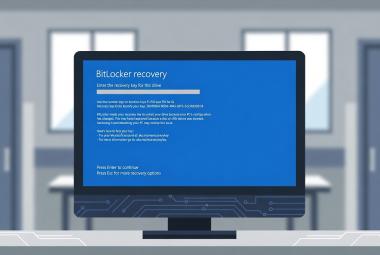
On March 11, 2026, an Iran-linked threat group called Handala executed a destructive cyberattack against Stryker Corporation, one of the largest medical device manufacturers in the world. They did not deploy ransomware. They did not drop malware. They walked in with compromised credentials and used Stryker's own Microsoft Intune environment to remotely wipe tens of thousands of devices across dozens of countries.
Ten days later, we now have a much clearer picture of what happened, how it happened, and why every health care IT team managing a Microsoft environment should be paying very close attention.
What Happened
Stryker is a Fortune 500 medical technology company headquartered in Portage, Michigan. They manufacture surgical equipment, orthopedic implants, neurotechnology, and a range of hospital equipment including defibrillators and ambulance cots. They employ approximately 56,000 people across operations in more than 60 countries and reported over $25 billion in revenue for 2025. If your hospital buys implants or surgical tools, there is a very good chance Stryker is in your supply chain.
In the early morning hours of March 11, Handala - a group the U.S. Department of Justice has now formally linked to Iran's Ministry of Intelligence and Security (MOIS) - gained access to Stryker's internal Microsoft environment. According to reporting from BleepingComputer, the attackers compromised an administrator account and used it to create a new Global Administrator account, which gave them near-unlimited control of the company's Windows environment.
From there, they accessed Stryker's Microsoft Intune dashboards. Intune, as anyone managing endpoints in a health care organization knows, is the cloud-based endpoint management tool that lets administrators remotely manage laptops, desktops, and mobile devices - including the ability to remotely wipe them.
That is exactly what Handala did. They triggered mass device wipes across the organization. Independent reporting from BleepingComputer puts the confirmed number at approximately 80,000 devices wiped. Handala's own claims are higher - more than 200,000 devices and 50 terabytes of exfiltrated data - but those figures are unverified and should be treated with appropriate skepticism given the group's history of overstating impact. Regardless of the exact count, the result was the same: a global operational disruption that took down order processing, manufacturing, and shipping across the company.
Stryker disclosed the incident in an SEC filing, confirming that the attack caused disruptions to order processing, manufacturing, and shipping. In its customer communications, the company stated there was no indication of ransomware or malware and that the incident was contained to its internal Microsoft corporate environment. Stryker emphasized that its internet-connected medical products remained safe to use. As of this writing - ten days after the attack - Stryker says the restoration process is "progressing steadily" and it is prioritizing systems that directly support customers, ordering, and shipping. However, reports as recent as March 20 indicate that production at some facilities remains disrupted and many staff are still unable to work normally. Full recovery timelines have not been disclosed.
How They Got In: Stolen Credentials and a Trusted Tool
The emerging picture of how this attack worked should be concerning for anyone who manages a Microsoft environment.
Security researcher Alon Gal's analysis of infostealer malware logs revealed that credentials for Stryker administrator accounts had been harvested by infostealer malware, potentially months or even years before the attack. Those credentials included Microsoft service logins and mobile device management (MDM) credentials. As Gal noted publicly, this would have given Stryker ample time to rotate those credentials and avoid the breach entirely.
The attack method itself was not technically sophisticated. Handala did not develop a custom exploit or discover a zero-day vulnerability. They took compromised credentials, used them to gain administrative access, and then used a built-in feature of a legitimate management tool - the Intune remote wipe command - to destroy data at scale. This is what security researchers call "living off the land," using the victim's own tools against them.
For health care IT teams, this is the part that should keep you up at night. The same Intune console you use to enforce compliance policies, push application updates, and manage your device fleet can be weaponized by an attacker who gets their hands on the right credentials. No malware required. No suspicious executable to trigger an endpoint detection alert. Just an admin-level action that looks exactly like a legitimate administrative operation because it is being performed through the legitimate administrative interface.
The Response: CISA, Microsoft, and the FBI
The federal response to the Stryker incident has been rapid and unusually specific.
CISA Advisory (March 18): The Cybersecurity and Infrastructure Security Agency issued an alert explicitly referencing the Stryker attack and urging all U.S. organizations to harden their endpoint management system configurations. CISA's recommendations center on three areas:
First, enforce least-privilege administration. Use Intune's role-based access control (RBAC) to ensure administrators only have the permissions necessary for their specific responsibilities. Scope what actions a role can perform and which users and devices it can affect.
Second, deploy phishing-resistant multi-factor authentication on all privileged accounts. CISA specifically calls out using Microsoft Entra ID capabilities including Conditional Access, risk-based signals, and privileged access controls to block unauthorized access to high-privilege Intune actions. Standard MFA is not sufficient here. CISA is recommending phishing-resistant methods - FIDO2 security keys, Windows Hello for Business, or certificate-based authentication.
Third, and this is the big one - enable Multi Admin Approval in Intune. This requires a second administrative account to approve changes to sensitive or high-impact actions such as device wiping, script deployments, application pushes, RBAC modifications, and configuration profile changes. If Stryker had this enabled, a single compromised admin account could not have unilaterally executed a mass device wipe.
Microsoft Guidance (March 13): Microsoft published new best practices for securing Intune within days of the attack. The guidance covers RBAC configuration, Privileged Identity Management (PIM) deployment, zero trust configuration for Intune, and the Multi Admin Approval feature.
FBI Domain Seizures (March 19-20): The FBI seized four domains used by Handala and a related MOIS-linked persona. The Department of Justice formally accused Iran's Ministry of Intelligence and Security of operating Handala as a front for psychological operations, cyberattacks, and the publication of stolen data. FBI Director Kash Patel stated the FBI "took down four of their operation's pillars" and that they were "not done." Handala's X (Twitter) account was also suspended, though the group's Telegram channel remains active and has acknowledged the seizures while vowing to continue operations.
The Real-World Impact on Health Care
While Stryker itself is not a covered entity under HIPAA, the downstream effects of this attack rippled directly into health care delivery.
In Maryland, the state's Institute for Emergency Medical Services reported that some EMS providers temporarily paused use of Stryker's LIFENET electrocardiogram transmission system - used by emergency responders to send patient data to hospitals in transit - as a precaution following the attack. EMS clinicians were directed to fall back to radio consultation with receiving hospitals until the situation could be assessed. Stryker later clarified that LIFENET remained fully functional and was not directly disrupted by the cyber incident, and that the pauses were precautionary rather than the result of a system outage. That distinction matters, but it also illustrates how a vendor-level incident can trigger operational disruptions at the point of care even when the clinical systems themselves are technically unaffected.
Stryker also reported that order processing, manufacturing, and shipping for medical devices were disrupted. For hospitals waiting on implants or surgical equipment, that translates to potential procedure delays. This is the supply chain risk that health care organizations talk about in the abstract during risk assessments but rarely plan for concretely.
What This Means for Your Organization
If you are managing a Microsoft environment in a health care organization - whether you are a solo IT person at a 25-bed Critical Access Hospital or part of a larger team at a health system - the Stryker incident is a case study in exactly the kind of attack you need to defend against. Here is what to do about it.
Harden Your Intune Environment Now
If you are using Intune (and if you are managing devices in a Microsoft 365 environment, you very likely are), the CISA advisory is your action item list. The key steps are straightforward even if implementation takes some effort:
Review your Intune RBAC roles. Are your administrators operating with Global Administrator or Intune Administrator privileges when they only need more limited roles? Scope down. The principle of least privilege is not new, but the Stryker attack is a concrete demonstration of what happens when broad administrative access gets compromised.
Enable Multi Admin Approval for destructive actions. Device wipes, script deployments, and RBAC changes should require approval from a second administrator. This is the single most impactful control you can implement to prevent a Stryker-style attack. Microsoft's documentation covers how to configure this.
Deploy phishing-resistant MFA on all administrative accounts. If your Intune admins are still authenticating with passwords and SMS codes, that is a problem. Entra ID Conditional Access policies should require phishing-resistant authentication for any access to administrative portals.
Review Privileged Identity Management (PIM) settings. Administrative access should be just-in-time, not standing. If an admin needs Global Administrator rights for a specific task, they should activate that role for a limited time window, not hold it permanently.
Audit Your Credential Hygiene
The Stryker attack likely started with credentials harvested by infostealer malware - potentially months before the breach. That means the credentials were sitting in criminal marketplaces, available to anyone willing to pay for them.
If your organization is not monitoring for credential exposure, you are flying blind. Services like Microsoft Entra ID Protection, Have I Been Pwned (for individual accounts), and various dark web monitoring services can flag when your organization's credentials show up in breach data or infostealer logs. At minimum, enforce regular credential rotation for all privileged accounts and investigate any sign-in anomalies flagged by Entra ID.
Think Beyond Intune
The lesson here is not just about Intune. It is about any centralized management platform that has administrative control over your environment. Configuration Manager (SCCM/MECM), VMware vCenter, your firewall management console, your backup management console - any tool that can push changes to many systems at once is a potential force multiplier for an attacker.
Ask yourself: if someone compromised your Configuration Manager admin account right now, what could they do? Push a malicious package to every workstation in your environment? Wipe your task sequences? If someone got into your backup management console, could they delete your backup jobs and retention policies?
The management plane is the attack surface. Secure it accordingly.
Review Your Contingency Plan
The HIPAA Security Rule requires covered entities and business associates to establish contingency plans under 45 CFR 164.308(a)(7), including a data backup plan (Required), disaster recovery plan (Required), and emergency mode operation plan (Required). If a mass device wipe hit your organization tomorrow, could you actually recover?
That is not a hypothetical anymore. The Stryker attack demonstrated that an attacker with administrative access to your endpoint management platform can wipe your entire fleet in one action. Your disaster recovery plan needs to account for that scenario specifically. Where are your backup images? How quickly can you re-provision devices? Do you have offline backups of your critical configuration data that are not accessible through the same administrative credentials?
Assess Your Vendor and Supply Chain Risk
Stryker's disruption affected hospitals downstream. If your organization relies on vendor-managed devices, cloud-hosted clinical systems, or connected medical devices, the question becomes: what happens when one of your critical vendors gets hit?
The HIPAA Security Rule requires written contracts or other arrangements with business associates under 45 CFR 164.308(b)(1), including requirements that business associates report security incidents. But a BAA alone does not keep your operations running when a vendor goes offline. You need actual contingency plans for your critical vendor dependencies. What is your fallback if your implant supplier cannot process orders for two weeks? What is your alternative communication path if a connected device system goes down?
The Bigger Picture: Geopolitical Cyber Risk Is Health Care's Problem Now
The Stryker attack did not happen in a vacuum. It occurred in the context of the ongoing U.S.-Iran conflict that began in late February 2026. Handala explicitly framed the attack as retaliation for a U.S. air strike on an Iranian school. The DOJ has confirmed the group operates under Iran's Ministry of Intelligence and Security.
Multiple threat intelligence firms - including Palo Alto Networks Unit 42, Check Point Research, and Flashpoint - have warned of increased cyber activity tied to the conflict, and health care is squarely in the crosshairs. Iran has a history of targeting critical infrastructure, and health care's combination of high-value data, operational urgency, and often-limited security resources makes it an attractive target.
The Stryker attack may have been the first significant destructive cyberattack against a U.S. company during the Iran conflict, but security analysts broadly agree it will not be the last. As retired U.S. Army Lt. Gen. Ross Coffman told The Register, "What we saw against Stryker - it's just the beginning."
Health care IT teams do not typically think of themselves as operating on the front lines of a geopolitical conflict. But when state-linked actors are targeting your industry's supply chain and the tools you use to manage your environment every day, that is exactly where you are.
What to Watch
The proposed HIPAA Security Rule update, currently on OCR's regulatory agenda for finalization in May 2026, would make many of the controls discussed in this article explicitly mandatory. The proposed rule would eliminate the Addressable designation for implementation specifications, require MFA, mandate encryption at rest and in transit, require annual penetration testing, and impose a 72-hour system restoration requirement. The Stryker attack is a real-world demonstration of exactly why those proposed requirements exist.
Whether or not the final rule materializes on that timeline, the controls CISA is recommending are not optional from a practical standpoint. The threat is here now, and "we will get to it when the regulation requires it" is not a defensible posture - operationally or legally.
Sources
- CISA Alert: Endpoint Management System Hardening (March 18, 2026)
- CNN: Pro-Iran hackers claim cyberattack on major US medical device maker (March 11, 2026)
- TechCrunch: Stryker says it's restoring systems after pro-Iran hackers wiped thousands of employee devices (March 17, 2026)
- SecurityWeek: Iranian Hackers Likely Used Malware-Stolen Credentials in Stryker Breach (March 18, 2026)
- BleepingComputer: CISA urges US orgs to secure Microsoft Intune systems after Stryker breach (March 19, 2026)
- TechCrunch: U.S. accuses Iran's government of operating hacktivist group that hacked Stryker (March 20, 2026)
- BleepingComputer: FBI seizes Handala data leak site after Stryker cyberattack (March 19, 2026)
- The Register: Iran cyberattack against med tech firm 'just the beginning' (March 18, 2026)
- NBC News: FBI seems to seize website tied to Iranian cyberattack on Stryker (March 20, 2026)
- HIPAA Journal: Iran Linked Hacking Group Wipes Data of U.S. Medical Device Manufacturer (March 20, 2026)
- HIPAA Journal: Final Rule Implementing HIPAA Security Rule Updates Edges Closer (March 20, 2026)
- Nextgov/FCW: Stryker hack could set stage for more pro-Iran cyber sabotage (March 13, 2026)
- Microsoft: Best practices for securing Microsoft Intune
- Stryker: Customer Updates - Stryker Network Disruption
- Cybersecurity Dive: Stryker begins restoring ordering, shipping systems after cyberattack (March 18, 2026)
- Irish Examiner: Stryker hack impact deepens as Cork facilities struggle to restore systems (March 20, 2026)
This article is for informational purposes only and does not constitute legal or compliance advice. Covered entities and business associates should consult qualified legal counsel or compliance professionals before making decisions pertaining to HIPAA or IT infrastructure.