


Microsoft Promises a Windows 11 Quality Overhaul. The Same Week's Patch Tuesday Broke Sign-Ins.
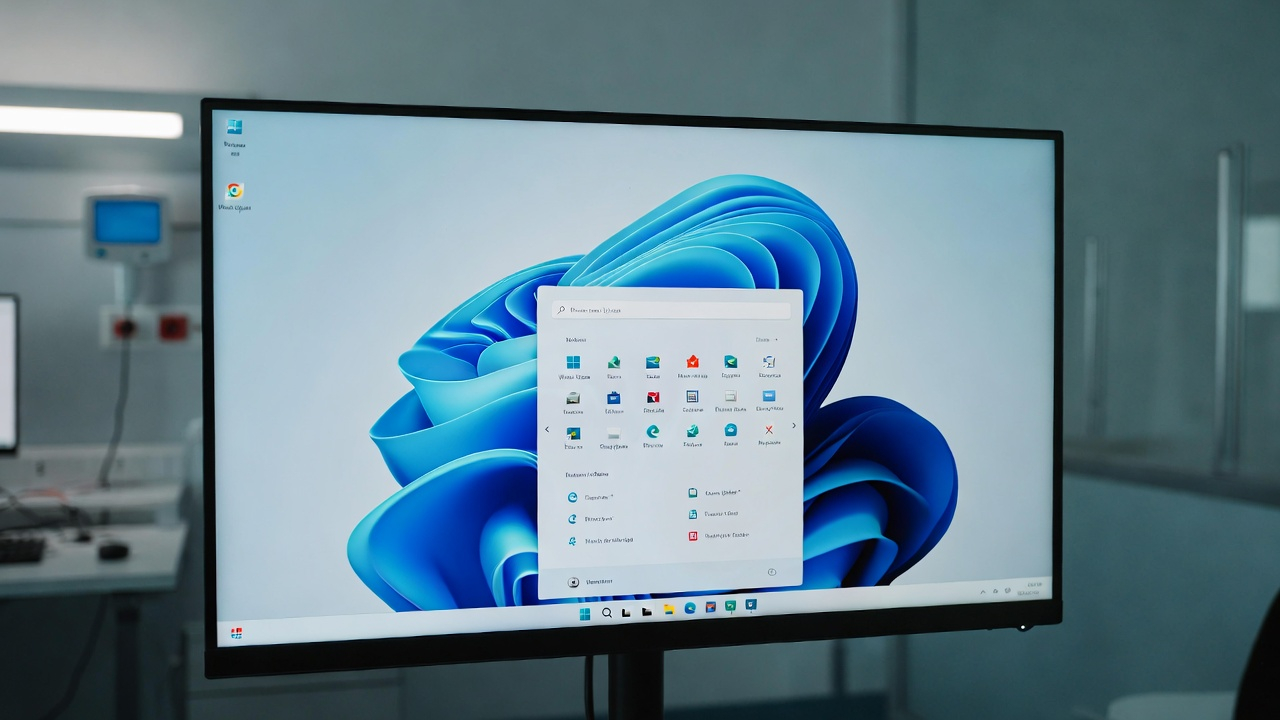
You have to hand it to Microsoft's sense of timing.
On March 20, Pavan Davuluri - Executive Vice President of Windows and Devices - published a blog post titled "Our commitment to Windows quality." It is the most comprehensive quality-focused roadmap Microsoft has put out for Windows 11 in years. Movable taskbar. Less Copilot bloat. Fewer forced restarts. A faster File Explorer. A genuine commitment to listening to user feedback and building a better operating system.
That same day, Microsoft acknowledged that the March 10 Patch Tuesday update (KB5079473) had broken Microsoft account sign-ins across Teams, OneDrive, Edge, Excel, Word, and Microsoft 365 Copilot. The emergency out-of-band fix - KB5085516 - shipped the next day, March 21.
If you manage Windows endpoints in a health care environment, that juxtaposition probably feels very familiar. This is the reality of living inside the Microsoft ecosystem right now: genuinely promising strategic direction, paired with an update cadence that still has the capacity to ruin your Tuesday. Or your Wednesday. Or your whole week.
Let's talk about what Microsoft actually announced, why some of it matters quite a bit for health care IT, and where the healthy skepticism should land.
What Microsoft Is Actually Changing
The blog post covers a lot of ground, but there are a handful of changes that deserve specific attention from anyone managing Windows in a clinical or health care operations environment.
The taskbar is finally unlocked. Microsoft removed the ability to reposition the Windows taskbar when Windows 11 launched in October 2021. For more than four years, the taskbar has been locked to the bottom of the screen. That is now changing. Users will be able to move the taskbar to all four screen positions - bottom, top, left, or right - restoring functionality that existed in every prior version of Windows going back to the 1990s. A smaller taskbar option is also in the works, though Microsoft has said that will come later.
This is one of those changes that sounds cosmetic until you think about where Windows machines live in health care. Widescreen monitors at nursing stations. Vertically-mounted displays on medication carts. Compact screens in exam rooms where every pixel of vertical space matters because the EHR is open and the provider needs to see as much of the patient chart as possible without scrolling. The locked-bottom taskbar was not just a preference issue. It was a workspace efficiency issue, and it is good to see it addressed.
For context on how long this has been a pain point: a former Microsoft executive, Mikhail Parakhin, stated publicly in February that he fought against the original decision to remove taskbar positioning. This was not a niche complaint.
Copilot is getting pulled back. Microsoft is reducing Copilot entry points in several built-in apps, starting with Snipping Tool, Photos, Widgets, and Notepad. The stated goal is to focus AI integration on experiences that are "genuinely useful and well-crafted" rather than pushing Copilot into every available surface.
This matters for managed environments. Every unwanted AI entry point on a managed workstation is something your users are going to ask about, something that potentially phones home to cloud services you may not have evaluated from a compliance perspective, and something that adds complexity to an image you are trying to keep clean and predictable. Health care IT teams already spend enough time managing what is on their endpoints. Less clutter in the base OS is a practical win.
Worth noting: this is not Microsoft removing AI from Windows. It is Microsoft acknowledging that the strategy of embedding Copilot into everything was generating more frustration than value. The broader Windows community has not been subtle about this, with the term "Microslop" gaining traction in online forums and social media over the past several months as shorthand for the perception that AI was being crammed into places it did not belong.
Windows Update disruption is being addressed directly. This one is probably the most immediately impactful for health care IT. Microsoft committed to several changes around Windows Update:
Moving devices to a single monthly reboot for updates, while preserving the option for organizations and users who want faster access to new features and fixes to continue updating more frequently. The ability to pause updates for longer periods when needed. The ability to restart or shut down without being forced to install pending updates. The ability to skip updates during initial device setup to get to the desktop faster. Fewer automatic restarts and reduced notification noise overall.
If you have ever had a workstation at a nurses station force a restart during a shift because a pending update timed out, or had a new PC take 45 minutes to become usable because it was cycling through updates during OOBE before the user could even log in, you understand why this matters. These are not theoretical problems. They happen in health care environments regularly, and they have real operational consequences.
File Explorer is getting performance work. Microsoft is promising a quicker launch, reduced flicker, smoother navigation, and lower latency for search and context menus. They are also committing to faster and more reliable file copy and move operations.
This is not glamorous, but File Explorer is one of the most used applications on any Windows desktop. In health care IT, it is the tool staff use to find scanned documents, move files between network shares, and locate resources. It being faster and more stable is a straightforward quality-of-life improvement.
Microsoft also shipped a redesigned Feedback Hub app to Windows Insiders the same day as the blog post. The update is the largest overhaul to Feedback Hub yet, with a new unified template, options for private or public feedback, and a streamlined interface designed to make it faster to report issues. It is a small thing, but if Microsoft is serious about using feedback to drive quality, making the feedback tool itself less painful to use is a reasonable place to start.
The Emergency Fix That Shipped Alongside All of This
While Microsoft was publishing a roadmap about quality and reliability, the March Patch Tuesday update (KB5079473) had already broken Microsoft account sign-ins for some users. The bug caused Windows to incorrectly report that the device had no internet connection, which cascaded into sign-in failures across Teams, OneDrive, Edge, Outlook, and Office apps.
Microsoft acknowledged the issue on March 20 and shipped the emergency out-of-band fix, KB5085516, on March 21. The fix applies to both Windows 11 25H2 (Build 26200.8039) and 24H2 (Build 26100.8039). It is classified as optional and will not download automatically unless the user has enabled "Get the latest updates as soon as they're available."
A few things health care IT teams should know about this specific issue:
The sign-in failure only affected Microsoft accounts (the personal/consumer account type), not Microsoft Entra ID (formerly Azure Active Directory) authentication. Organizations using Entra ID for app authentication were not impacted. This is relevant because most health care organizations with properly configured Microsoft 365 tenants are authenticating through Entra ID, not personal Microsoft accounts. However, environments where staff have signed in with personal Microsoft accounts alongside organizational accounts, or where Teams Free is in use, could have been affected.
This was not an isolated incident, either. March 2026 alone saw multiple out-of-band updates, including a security hotpatch (KB5084597) on March 13 for critical RRAS vulnerabilities on enterprise devices and a separate Bluetooth fix for LTSC earlier in the month. And all of this comes on the heels of the February 2026 update (KB5077181) that caused boot loops and sign-in failures for a number of devices.
The pattern is worth paying attention to. Monthly cumulative updates breaking things badly enough to require emergency out-of-band fixes is not a one-time event anymore. It is a recurring pattern, and it directly undermines the trust Microsoft is trying to rebuild with this quality commitment.
The Broader 2026 Roadmap
Beyond the immediate changes previewing in March and April, Microsoft outlined a full-year plan focused on three pillars: performance, reliability, and craft.
On the performance side, Microsoft is committing to reducing the baseline memory footprint of Windows, improving WinUI3 responsiveness (the framework underlying the Start menu and other core experiences), and improving the Windows Subsystem for Linux (WSL) with faster file performance and better enterprise management controls.
On reliability, the commitments include fewer OS-level crashes, better driver and Bluetooth quality, improved camera and audio connections, more consistent device wake behavior (including docking scenarios), and a higher quality bar for Windows Insider builds before they reach broader release.
On what Microsoft is calling "craft" - essentially polish and user experience - the plan includes a more relevant Recommended section in the Start menu with clear controls to customize or disable it, quieter defaults for Widgets, reduced notification volume, and a more streamlined initial device setup experience.
Microsoft also explicitly tied this work to the Secure Future Initiative, committing to building in new security capabilities and strengthening security defaults with every release.
What This Means for Your Shop
Let's separate the strategic from the tactical.
Strategically, this is a positive signal. Microsoft is publicly acknowledging that the Windows 11 experience has problems, that user feedback has been heard, and that the path forward is quality over feature velocity. For health care IT, where stability and predictability matter far more than bleeding-edge features, that is the right direction.
Tactically, nothing changes yet. These are commitments and roadmap items. The changes are previewing through the Windows Insider Program starting now, with broader availability throughout 2026. Production health care environments should not be enrolling in Insider rings to chase these features.
Here is what is actionable right now:
If you have devices affected by the March sign-in bug, deploy KB5085516. It is optional and will not push itself. You will need to either enable "Get the latest updates as soon as they're available" or pull it manually from Windows Update or the Microsoft Update Catalog. If you manage updates through WSUS or Microsoft Configuration Manager (formerly SCCM), you will need to approve and deploy it through your normal tooling.
If you are not already staggering your Patch Tuesday deployments, this is a good month to start. The pattern of cumulative updates requiring emergency fixes within days of release is not going away. A pilot ring that tests patches on a small group of non-critical machines before broader deployment is basic hygiene at this point. Even a 48-hour delay between Patch Tuesday and production deployment gives you time to catch the worst issues before they hit clinical workstations.
And if you have been fighting with third-party tools like ExplorerPatcher or StartAllBack to get your taskbar where you need it, keep an eye on the Insider builds. Native taskbar repositioning should reduce your dependency on those workarounds, but wait until the feature lands in a stable production build before removing those tools from your environment.
Finally, bookmark the Windows release health dashboard and keep the Windows Insider Blog in your reading rotation for the next few months. Microsoft has committed to previewing these changes through the Insider Program in March and April, with broader rollout throughout 2026. The release health dashboard is where you will find out first if a cumulative update has known issues before you push it to production.
The Honest Take
Microsoft deserves credit for this announcement. It is substantive, it is specific, and it directly addresses real complaints that the community has been raising for years. The tone of Davuluri's post reads less like a corporate PR exercise and more like someone who genuinely understands the frustration and wants to fix it.
But trust is built on delivery, not announcements. The same week Microsoft published this roadmap, a Patch Tuesday update broke Microsoft account sign-ins badly enough to require an emergency fix. The month before, a cumulative update caused boot loops. The broader Windows update experience in 2025 and early 2026 has been rough enough that a meaningful portion of the IT community has adopted "patch and pray" as something closer to a literal description than a joke.
For health care IT specifically, the update changes alone would justify cautious optimism. A single monthly reboot, longer pause windows, and the ability to shut down without forced updates are features that directly address the operational realities of managing Windows in environments that cannot tolerate unplanned downtime. If Microsoft delivers on these, it will make a tangible difference in how health care organizations manage their endpoints.
The Copilot reduction is welcome. The taskbar unlock is overdue. The File Explorer and performance work is the kind of foundational improvement that rarely makes headlines but actually matters in day-to-day operations.
Will 2026 be the year Windows 11 earns back the trust it has been bleeding? Maybe. Microsoft has laid out the right plan. Now they have to execute it without breaking something every month in the process. And in health care, where a forced restart on a clinical workstation is not just an inconvenience but a potential patient safety event, the bar for "trust" is higher than it is anywhere else. Microsoft's roadmap says the right things. The next twelve months of Patch Tuesdays will tell us whether they meant it.
Sources
- Davuluri, P. (March 20, 2026). "Our commitment to Windows quality." Windows Insider Blog. https://blogs.windows.com/windows-insider/2026/03/20/our-commitment-to-windows-quality/
- Microsoft Support. (March 21, 2026). "March 21, 2026 - KB5085516 (OS Builds 26200.8039 and 26100.8039) Out-of-band." https://support.microsoft.com/en-us/topic/march-21-2026-kb5085516-os-builds-26200-8039-and-26100-8039-out-of-band-09e85404-1cb6-4ed4-9ca5-3e40d74307b9
- Okemwa, K. (February 16, 2026). "Even a former Microsoft CEO was against the vertical Taskbar removals in Windows 11." Windows Central. https://www.windowscentral.com/microsoft/windows-11/former-microsoft-ceo-was-against-vertical-taskbar-removal
- Sen, S. (March 22, 2026). "Microsoft outs Windows 11 KB5085516 to fix internet access to OneDrive, Edge, Teams, Copilot." Neowin. https://www.neowin.net/news/microsoft-outs-windows-11-kb5085516-to-fix-internet-access-to-onedrive-edge-teams-copilot/
- Microsoft. "Secure Future Initiative." https://www.microsoft.com/en-us/trust-center/security/secure-future-initiative
- Microsoft. "Windows release health dashboard." https://learn.microsoft.com/en-us/windows/release-health/